
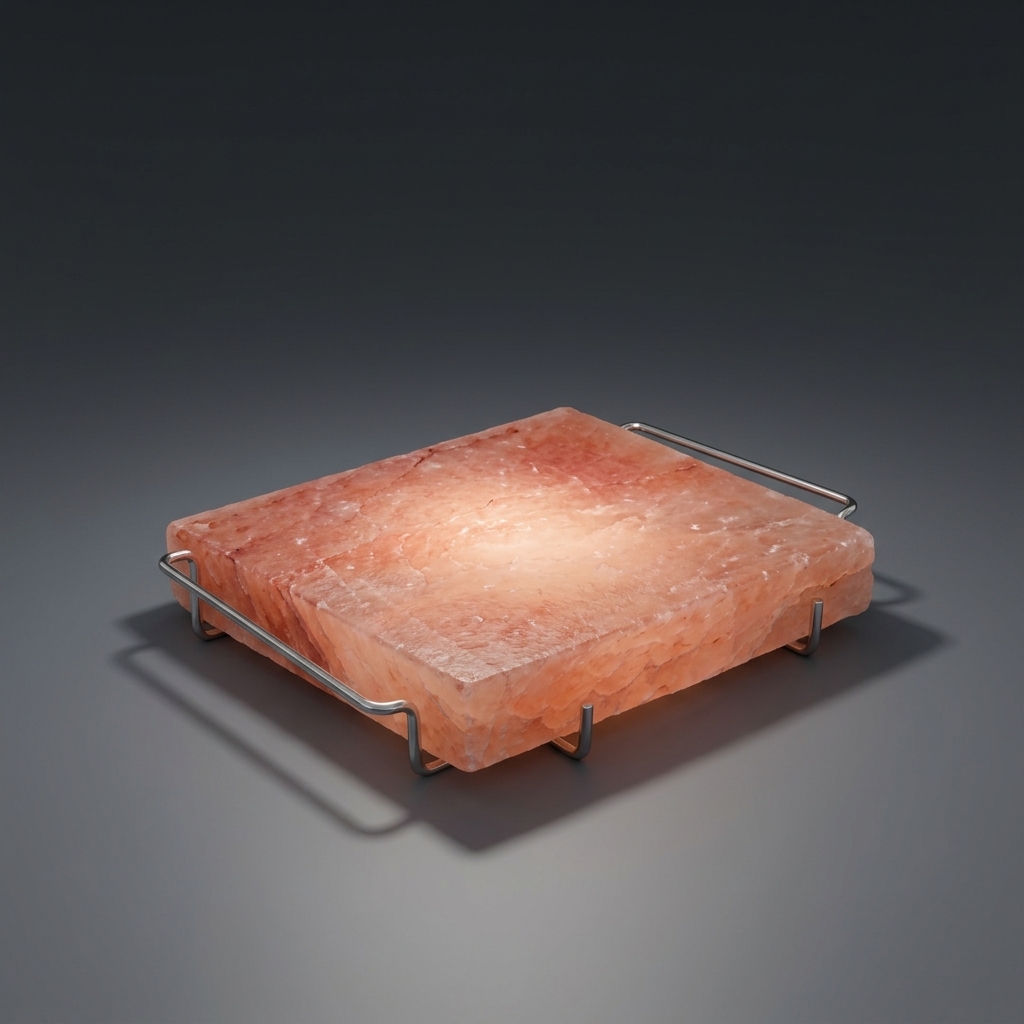
A Himalayan salt block — also called a salt plate, salt slab or salt hot plate — is a solid slab of pink rock salt that you can heat and cook on, or chill and serve food on. It holds heat for a long time, seasons food lightly as it cooks, and looks striking on the table. Used correctly, one block can last for dozens of meals. This guide explains exactly how to heat it, what to cook, how to clean it, and how to avoid the most common mistake: heating it too fast.
Why cook on a pink salt block?
- Gentle, even seasoning. Food picks up a light, clean saltiness where it touches the block, so you need little or no extra salt.
- Excellent heat retention. Once hot, a thick block stays hot for a long time, which is ideal for searing thin slices of meat, seafood and vegetables at the table.
- Hot or cold. The same block works as a chilled serving platter for fruit, cheese, sushi or desserts.
- Presentation. A glowing pink slab makes an ordinary dinner feel like an occasion.
How to heat a Himalayan salt block (step by step)
Salt blocks crack when the temperature changes too quickly, because moisture trapped inside the crystal expands as steam. Always heat slowly and in stages:
- Start with a completely dry block at room temperature. If it has been washed, let it air-dry for at least 24 hours.
- On a gas stove: place the block on a metal stand or rack, never directly on the flame. Heat on the lowest flame for 15 minutes, then on low-medium for 15 minutes, then on medium for another 15 minutes.
- In an oven: put the block in a cold oven, then raise the temperature by about 50 °C every 15 minutes until it reaches around 200–250 °C.
- Check that it is ready: sprinkle a few drops of water on the surface. If they sizzle away instantly, the block is ready for cooking.
The first few heatings may cause small cracks and a change in colour. This is normal and does not affect cooking.
What to cook on a salt block
Foods that cook quickly work best, because the longer food sits on salt, the saltier it becomes.
- Thinly sliced beef, mutton or chicken — think tikka-style strips or fajita slices, cooked in a minute or two per side.
- Prawns, fish fillets and scallops — seafood and salt are a natural pairing.
- Vegetables such as sliced mushrooms, peppers, courgette, onion rings and asparagus.
- Eggs — fried eggs on a salt block need no extra seasoning.
- Fruit — pineapple and peach slices caramelise beautifully and taste sweet and salty.
Tip: pat food dry and use only a thin film of oil. Very wet or heavily marinated food dissolves more salt and tastes saltier.
Serving cold food on a salt plate
Chill a block in the fridge for an hour or two and use it as a serving platter for sliced fruit, cheese, cured meats, sushi or even ice cream. Our pink salt serving plates are made for exactly this — and they make a memorable centrepiece at dawats and dinner parties.
How to clean a Himalayan salt block
- Let the block cool down completely — this can take a few hours.
- Scrape off any food with a spatula.
- Wipe with a cloth or sponge that is only slightly damp. A soft brush helps with stuck-on bits.
- Never use soap, never soak it and never put it in a dishwasher.
- Pat it dry and leave it in an airy, dry place for at least 24 hours before storing.
Salt is naturally resistant to bacteria, so a quick wipe is all it needs. Over time the block will become thinner and develop a unique pattern of cracks and colour — that is part of its character.
Safety tips
- A heated block stays hot for a long time. Use oven gloves and place it on a heatproof stand or wooden board, never directly on a table or glass surface.
- Never put a cold or damp block onto high heat or into a hot oven.
- Keep it away from children while it is hot.
- If a block develops a deep crack all the way through, retire it from cooking and use it as a cold serving board instead.
More pink salt for your kitchen
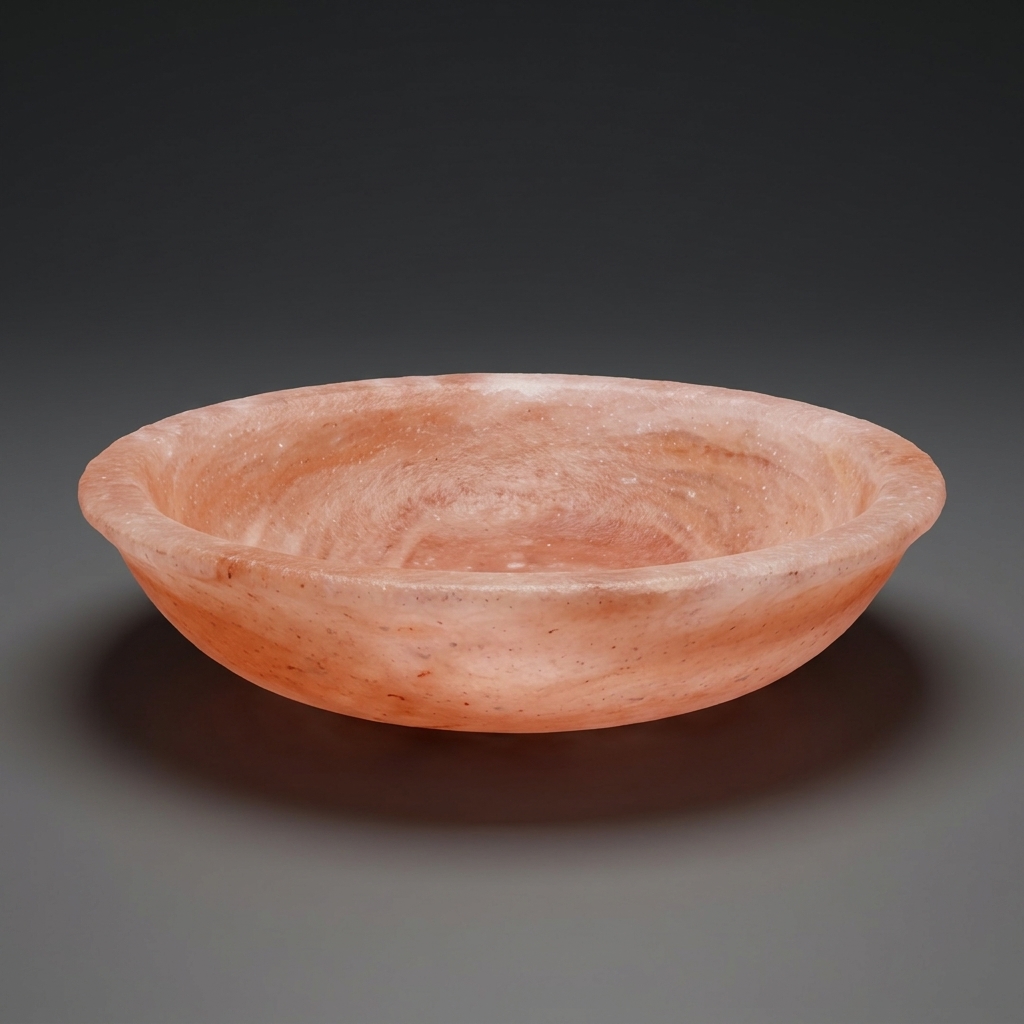
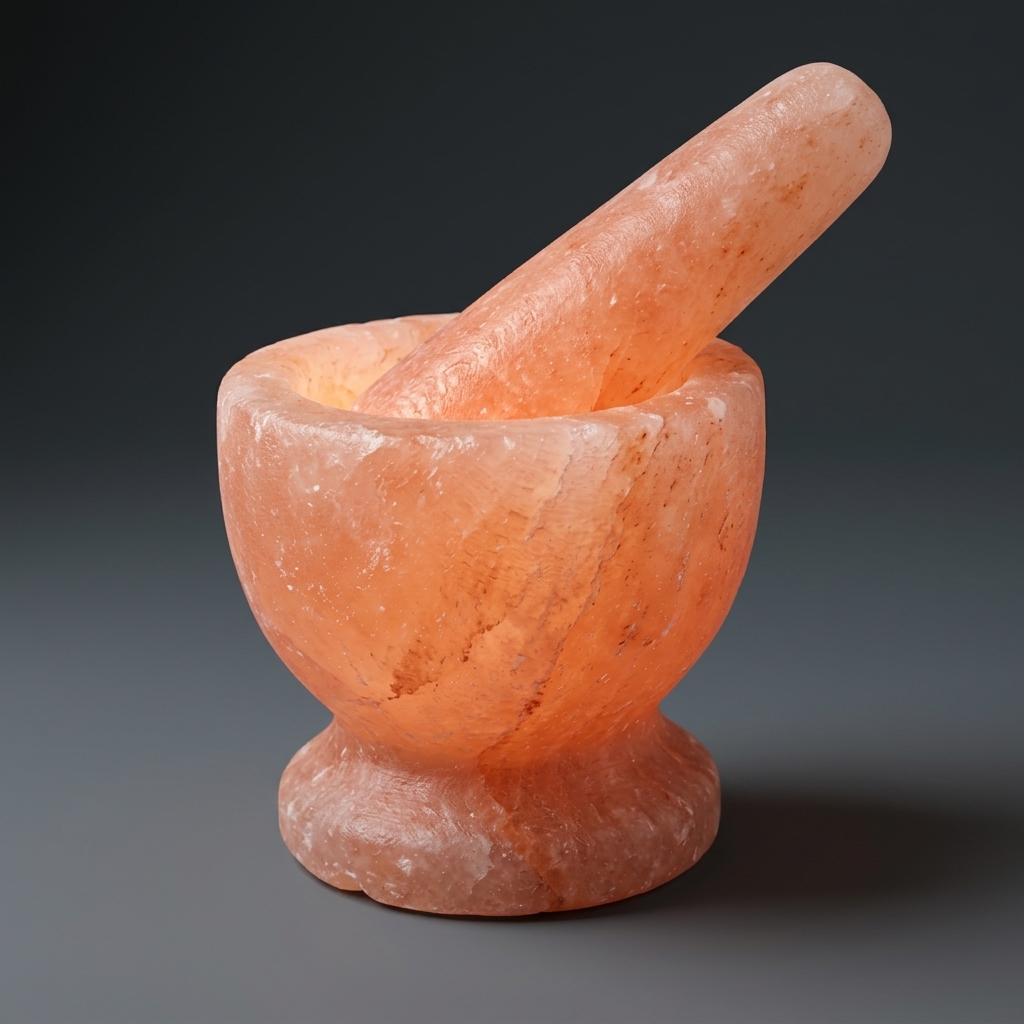
Salt blocks are only the start. A pink salt mortar and pestle seasons spices and herbs as you grind them, and a pink salt salad bowl adds a delicate seasoning to salads and fruit chaat.
Frequently asked questions
Will my food taste too salty?
Not if the block is properly hot and the food is reasonably dry. A hot block sears food quickly, so only a little salt transfers. A block that is not hot enough, or very wet food, makes things saltier.
Why did my salt block crack?
Almost always because it was heated too fast or was still damp inside. Heat slowly in stages and make sure the block is completely dry before each use.
Can I use a salt block on an induction hob?
No. Induction only heats metal cookware, so the salt itself will not warm up. Use a gas stove (on a metal stand), an oven or a barbecue.
How many times can I use it?
With slow heating and gentle cleaning, a good thick block can be used many times. It slowly gets thinner with use.
Ready to try it? Shop our Himalayan pink salt hot plate, cut from solid Salt Range rock in Pakistan.