
A Himalayan salt lamp is one of the simplest ways to bring a warm, amber glow into a room. Each lamp is a block of natural rock salt, hand-shaped and hollowed to hold a small bulb, so no two are exactly alike. This guide covers everything you need to know before you buy one: how to tell a genuine Himalayan salt lamp from an imitation, which shape and size suits your space, where to place it, and how to care for it so it lasts for years.
What is a Himalayan salt lamp?
A Himalayan salt lamp is carved from rock salt mined in the Salt Range of Punjab, Pakistan — the only commercial source of what the world calls Himalayan pink salt. The salt is cut into a shape (or left in its natural rough form), drilled to fit a bulb holder, and mounted on a base of wood, marble or iron. When the bulb is switched on, the light passes through the crystal and gives off a soft glow that ranges from pale peach to deep orange, depending on the colour of the salt.
How to tell a genuine salt lamp from a fake
Cheap imitations made of plastic, resin or low-grade salt are common. Here is what to check:
- The glow is uneven. Real salt has veins, cracks and denser patches, so the light is warmer in some areas and dimmer in others. A perfectly even glow usually means plastic or glass.
- It is heavy for its size. Rock salt is dense. A lamp the size of a large mango should weigh roughly 2–3 kg.
- The surface is slightly rough and crystalline. Rub a finger on it and lick it — it should taste of salt.
- It reacts to humidity. In a damp room a real lamp may feel slightly moist or leave a little residue on its base. That is normal for natural salt.
- The price is realistic. Mining, hand-carving and wiring all take work. A lamp that costs far less than others of the same size is worth questioning.
Choosing the right shape and size
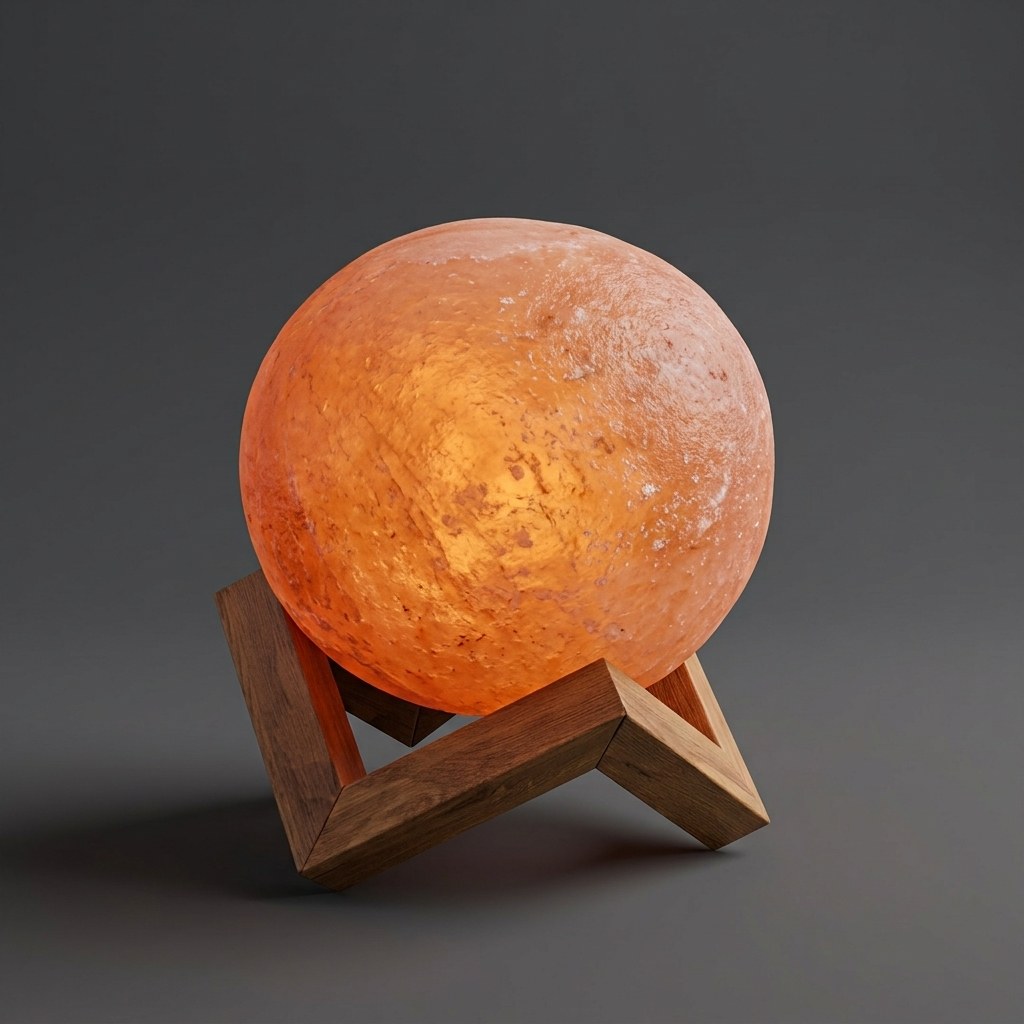
The right lamp depends on the room and the mood you want. As a rough rule, a 2–3 kg lamp suits a bedside table or a small room, while larger rooms look better with a bigger lamp or two smaller lamps placed apart.
- Natural shape lamps keep the rock's raw, rugged form — no two are the same. See our Natural Shape Pink and Natural Shape White lamps.
- Carved lamps such as the Sphere, Pyramid and Penny Cube suit modern interiors and look neat on a shelf or desk.
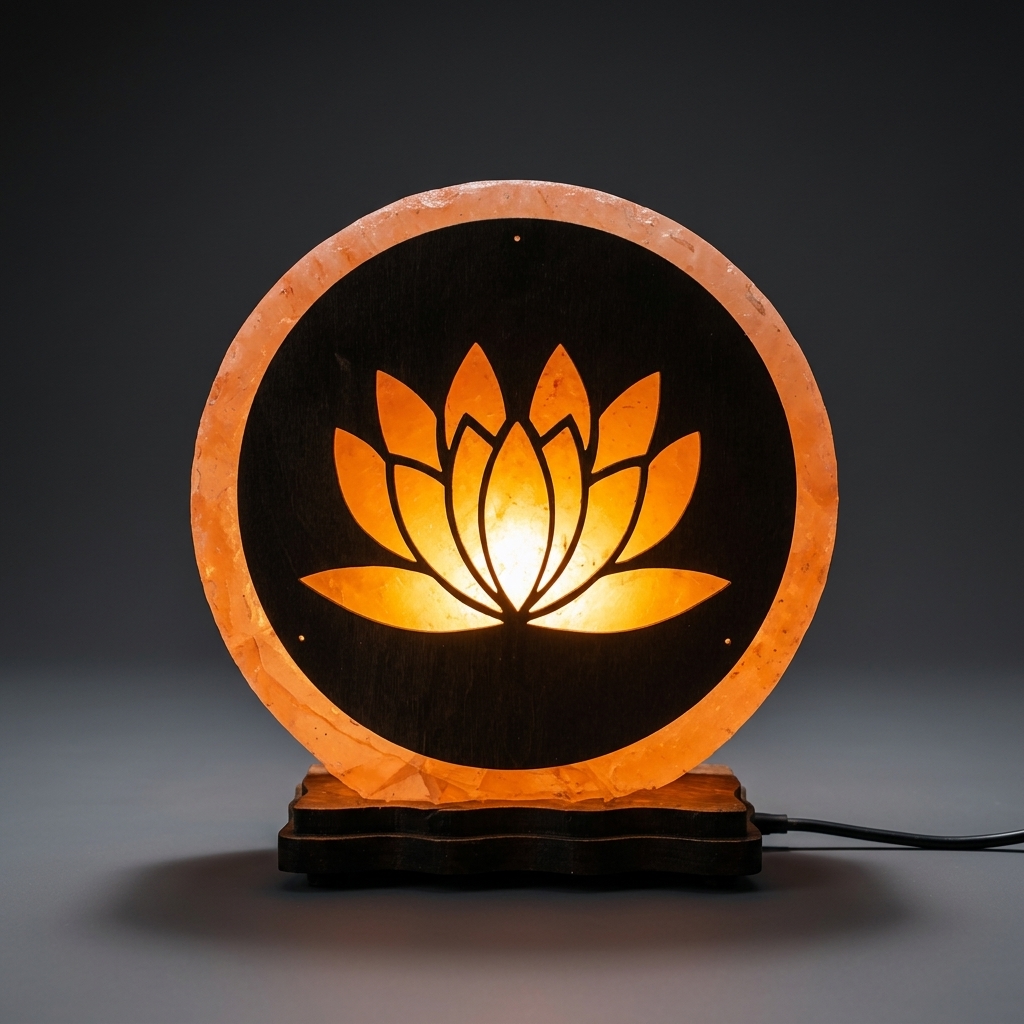
- Wooden sheet lamps pair salt with a carved wooden frame, like the Wooden Sheet House — a popular choice for children's rooms and gifts.
- Wrought iron basket lamps hold salt chunks in a metal frame, so you get the glow of many crystals at once. Try the Lantern Lamp with Handle.
- Night lights and USB lamps are small enough for a plug socket or a laptop port — ideal for hallways, nurseries and work desks. Browse our night lights and colour-changing USB lamps.
Where to place your salt lamp
- Bedside tables, living-room corners, reading nooks and work desks are all good spots — anywhere a soft, low light is welcome.
- Keep it away from bathrooms, kitchens near the sink, open windows in the monsoon season and anywhere it could get splashed.
- Place it on a coaster, mat or small tray to protect wooden furniture from any moisture.
- Keep lamps out of reach of pets. Cats and dogs may lick salt, and eating too much salt is harmful to animals.
Why do salt lamps "sweat" — and how to stop it
Salt naturally attracts water from the air. In humid weather — very common in Pakistan during the monsoon — a lamp can become damp, drip a little, or leave a white crust on its base. This is a sign of real salt, not a fault. To prevent it:
- Leave it switched on for several hours a day, or on low overnight. The warmth of the bulb keeps the surface dry.
- Use the correct bulb. A 15 W incandescent bulb gives enough heat to keep a small or medium lamp dry. Many LED bulbs stay too cool to do this.
- If you will be away, unplug the lamp and wrap it in a plastic bag to keep moisture out.
Cleaning and everyday care
- Switch the lamp off, unplug it and let it cool down.
- Wipe it with a cloth that is slightly damp — never wet — then dry it straight away with a dry cloth.
- Never put a salt lamp under running water or use cleaning sprays.
- Check the cord and bulb holder regularly, and replace the bulb with the same type and wattage.
Salt lamp safety tips
- Only use the bulb, holder and cord supplied, or an equivalent replacement of the same rating.
- Do not cover the lamp with cloth or paper while it is on.
- If the lamp is very wet or the base is crusted with salt, unplug it, let it dry fully and clean the base before switching it on again.
- Keep cords tidy so the heavy lamp cannot be pulled off a table.
What about the health claims?
You may have read that salt lamps purify the air or release negative ions. There is no strong scientific evidence for these claims, so we do not make them. What a salt lamp reliably gives you is a warm, calming light and a beautiful piece of natural stone — and many people find that this alone makes a room feel more relaxing in the evening.
Frequently asked questions
How long does a Himalayan salt lamp last?
With basic care a salt lamp can last for many years. The salt itself does not wear out; usually only the bulb needs replacing.
Can I leave my salt lamp on all night?
Yes, as long as it uses the correct bulb, the cord is in good condition and it sits on a stable, dry surface. Many people use smaller lamps and night lights as an overnight light.
Why is my lamp leaking water?
The room is humid and the lamp is not getting warm enough. Leave it on for longer and check that the bulb is the right wattage.
Pink or white salt lamp — which is better?
Both are natural rock salt from the same region. Pink lamps glow a warmer amber; white lamps give a softer, cooler light. It is purely a matter of taste and décor.
Ready to find your lamp? Browse our full range of Himalayan salt lamps, hand-carved in Pakistan and delivered across the country.